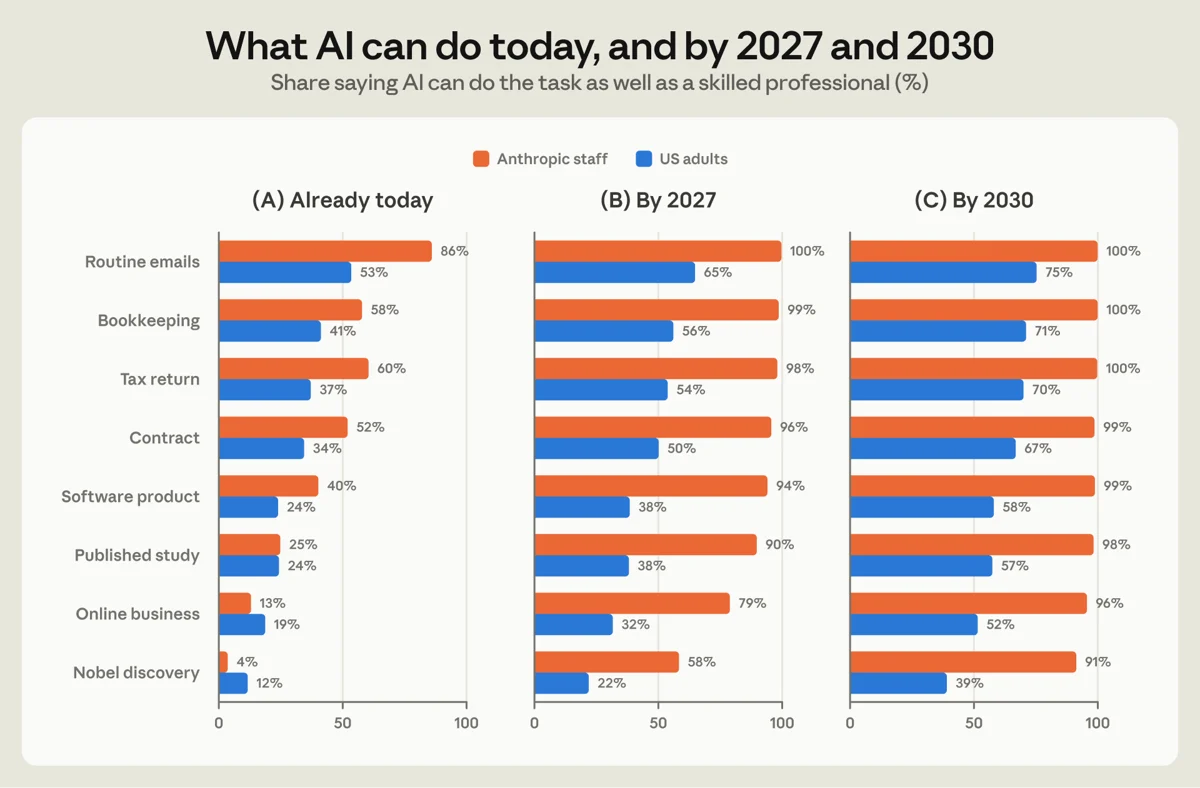
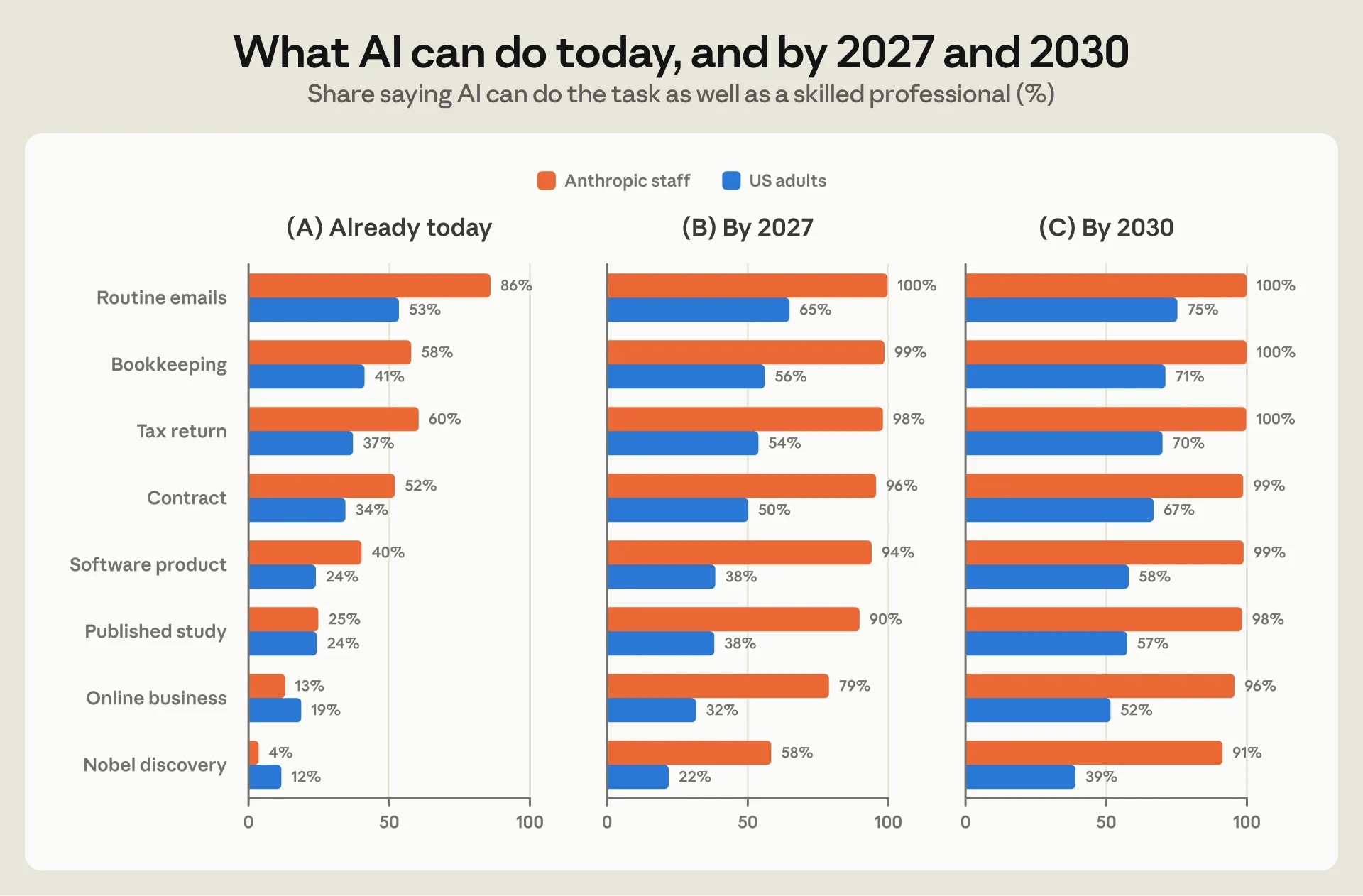
People building frontier AI expect it to advance much faster than the wider public does, according to an Anthropic report published October 16.
The study compares August surveys of 10,980 US adults and 1,334 Anthropic staff. Public responses were weighted; the internal staff poll was not.
The difference reaches their own jobs
On average, Anthropic staff expected AI to be capable of doing 75% of their current work hours by 2030. US workers put the figure at 28%. Even workers in computing, engineering and science who regularly use AI expected less automation than the company’s employees.
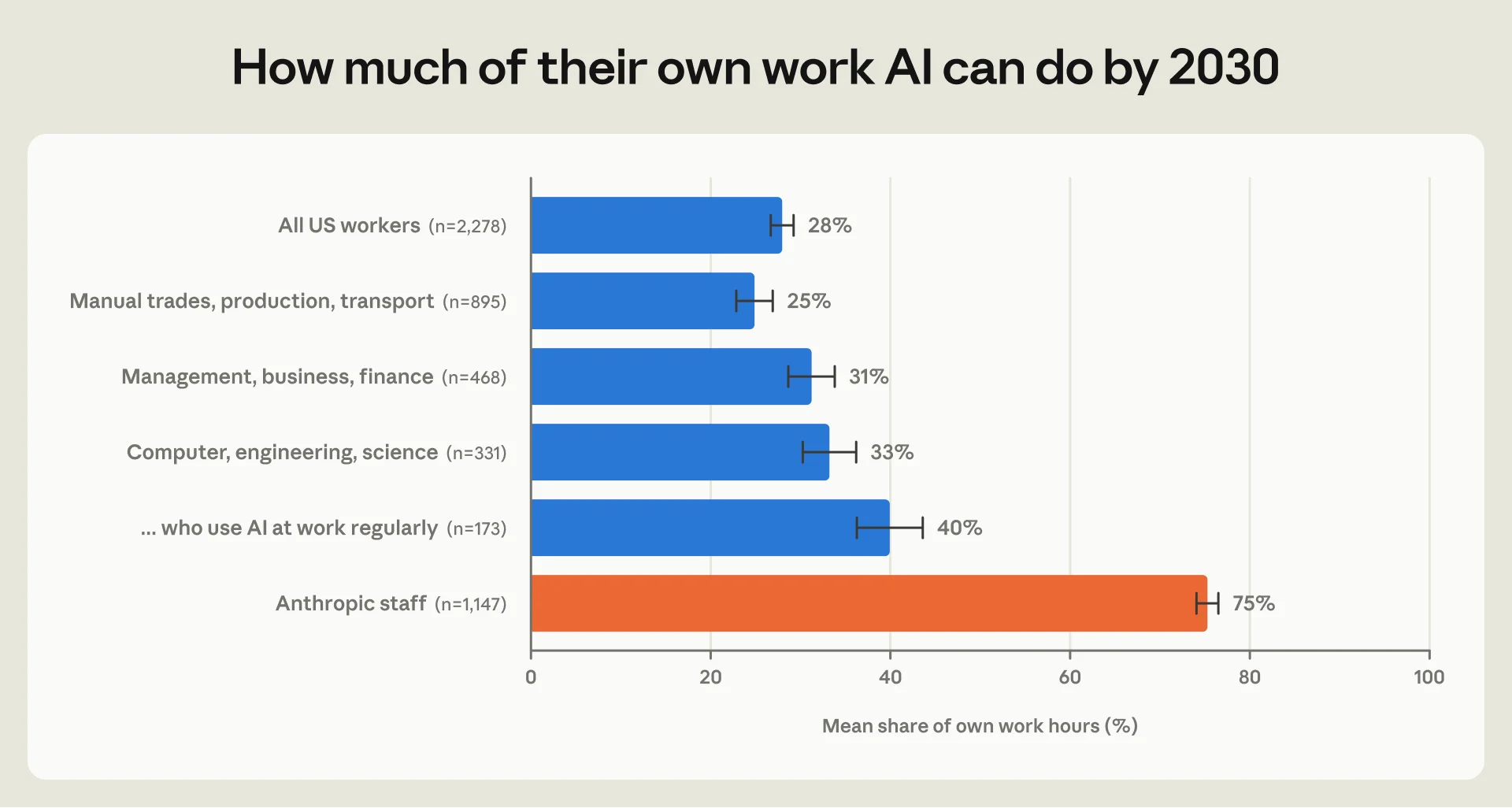
These numbers describe expectations. They do not establish how much work will actually be automated, or how many jobs will disappear. Employees at an AI laboratory also have unusually intensive exposure to the technology.
The useful finding is the disagreement itself. When people debate AI’s effect on work, they may be starting with very different assumptions about its future capabilities. The survey makes those assumptions visible without proving either group right.

No comments yet