People interrupt each other. They talk over music, traffic and the person beside them. AudioShake’s new Refinery service is aimed at making those recordings useful for training voice AI.
In its October 8 announcement, the company says the service takes finished audio and produces separate speaker tracks, with labels and quality scores. It does not require the original recording-session files.
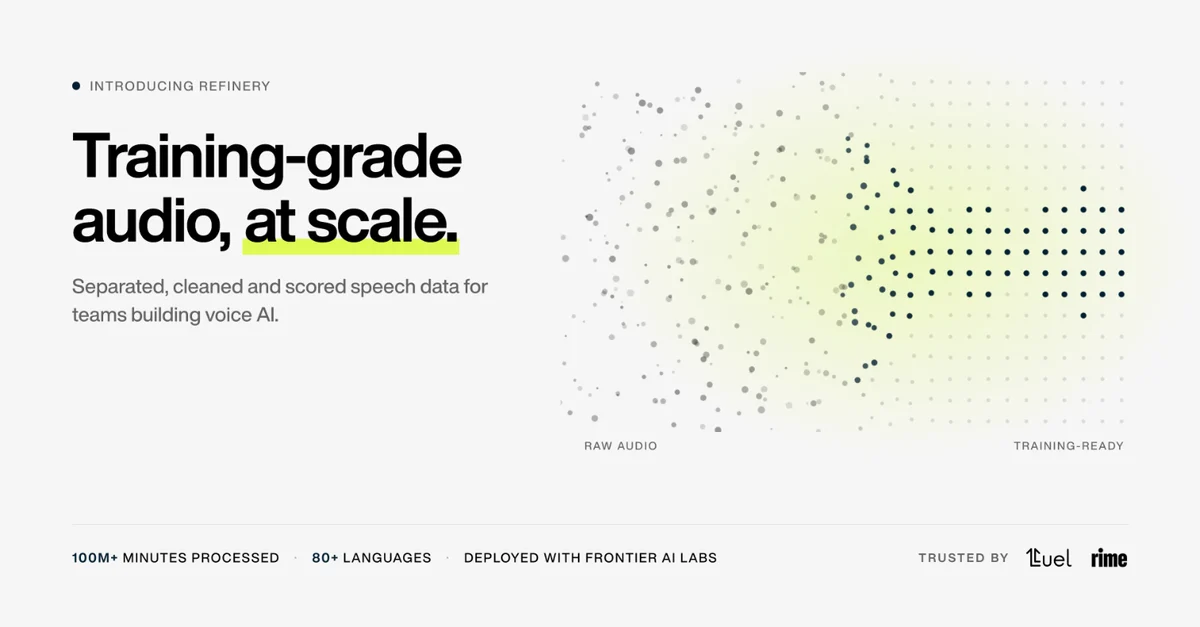
Image credit: AudioShake.
Why separating speakers matters
A transcript can flag that two people spoke at once without recovering either voice clearly. AudioShake says its Multi-Speaker 2.0 technology can separate those voices while preserving interruptions and other conversational details. Confidence scores help teams decide which segments to keep and which need review.
The company also says early private versions processed more than 100 million minutes over the past year. That is a company-reported usage figure, rather than an independent measure of accuracy.
What to watch
For a voice assistant, understanding an interruption can matter as much as understanding a perfectly spoken command. Better training material could help, but useful separation needs to survive difficult recordings, accents and background noise.
Our take: the interesting part is the ability to reject weak material systematically. A larger dataset is only helpful if its labels and speaker tracks are trustworthy. Developers should evaluate the output on recordings that resemble their actual users before assuming a cleaner demo means a better assistant.
*Image credit: AudioShake.*



No comments yet