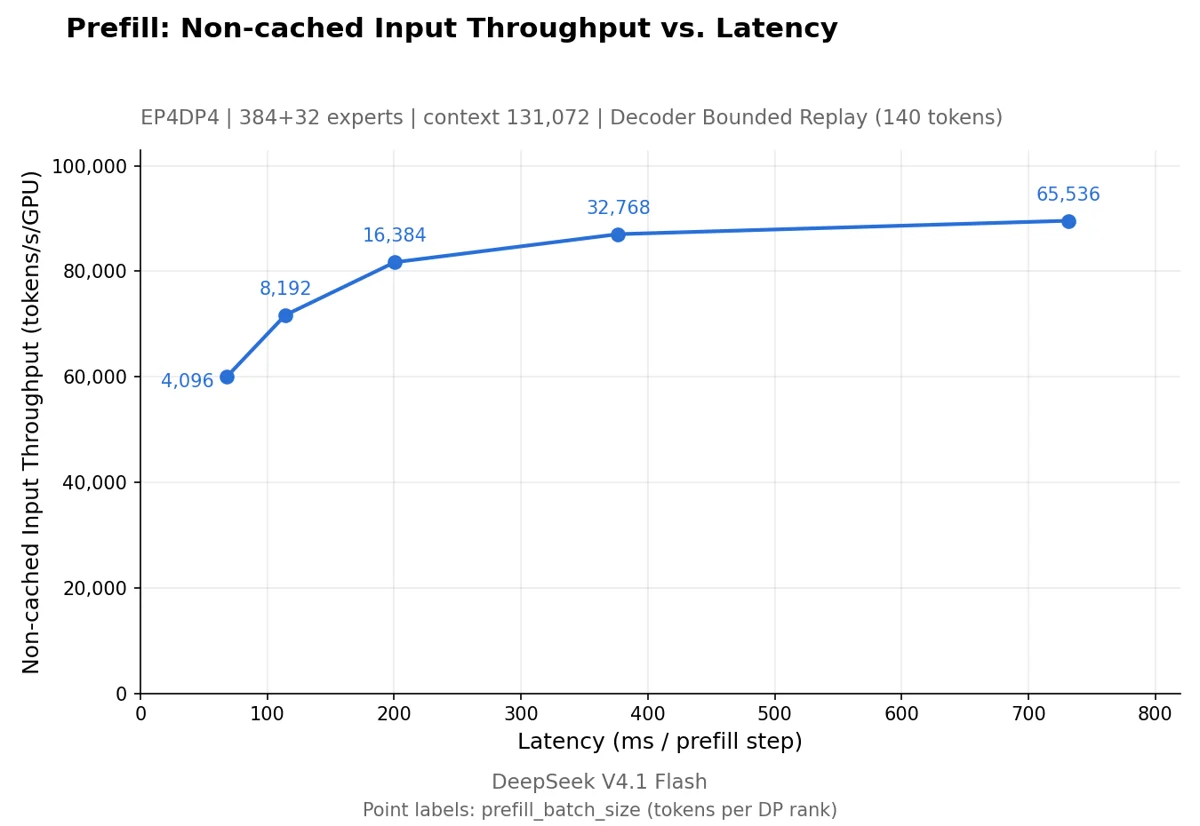
DeepSeek has opened DeepInfer, the inference engine it says powers its V4.1 Flash service. The October 20 release makes more of the software between a trained model and a usable answer available under Apache 2.0.
The repository supports DeepSeek-V4.1-Flash on NVIDIA SM100 GPUs and Huawei Ascend 950 NPUs. It includes optimized kernels, scheduling, speculative decoding and structured output.
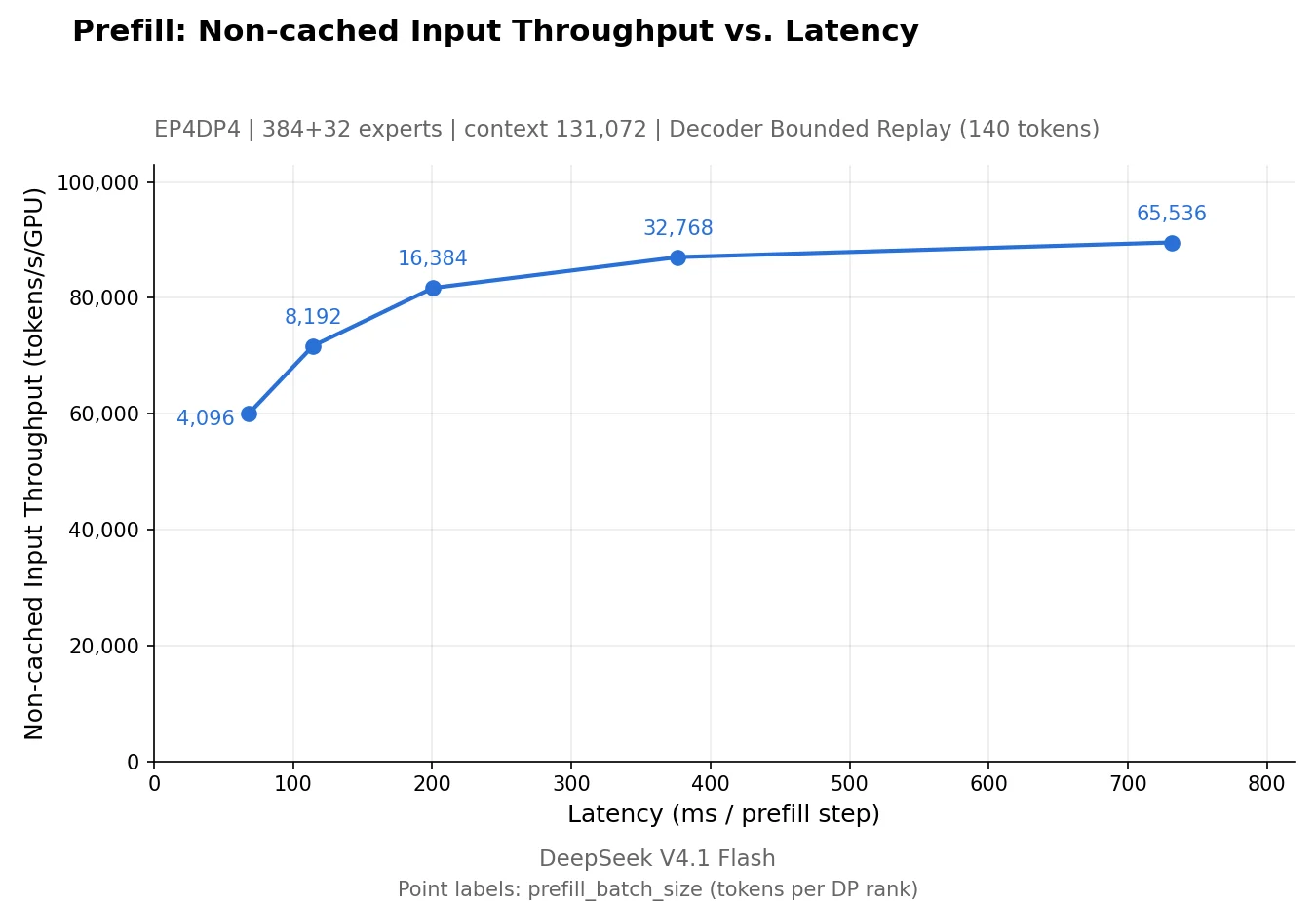
What the release includes
The published code provides offline inference. A complete online service still needs a KV cache system, separation of serving stages and load balancing across replicas, which the README explicitly lists as additional requirements.
That makes this a useful release for infrastructure teams, with substantial integration work remaining before deployment.
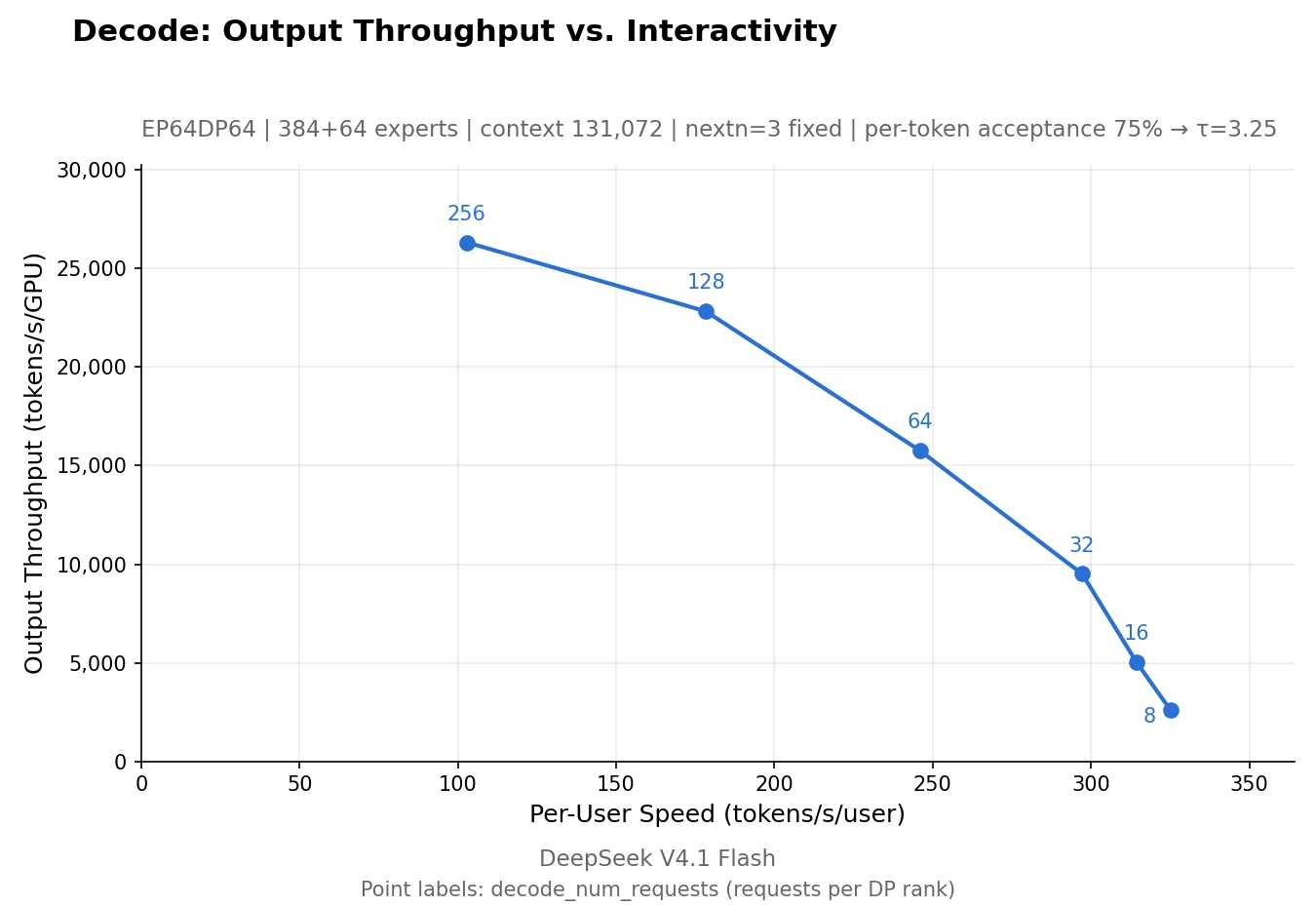
DeepSeek’s deployment Q&A explains the scale behind its service. It describes an efficient deployment unit with 64 GPUs processing prompts and another 64 generating answers. It also says a production cluster serves 155 trillion tokens daily, a company-reported figure.
The charts illustrate a practical tradeoff: packing in more work can raise total throughput while slowing the response each person sees. Teams evaluating the code need to measure both against their own traffic, hardware and latency targets.



No comments yet