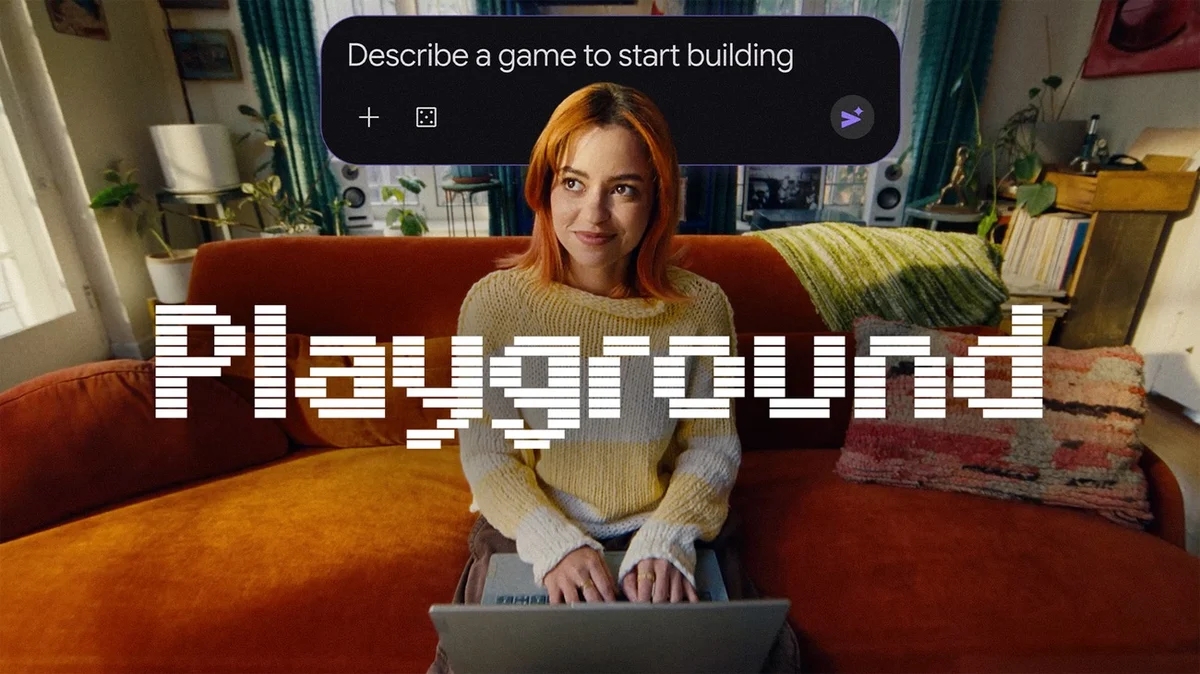
Google has launched Playground, an experimental AI tool for making games by describing them. The October 7 announcement brings game creation, testing and sharing into a browser, without asking beginners to learn a game engine first.
Who can use Google Playground?
The initial release is for U.S. users aged 18 and over. Creation access is rolling out in tiers tied to Google One membership. Google hasn’t presented this as unlimited game generation for every account, so check your account’s access before planning a project.
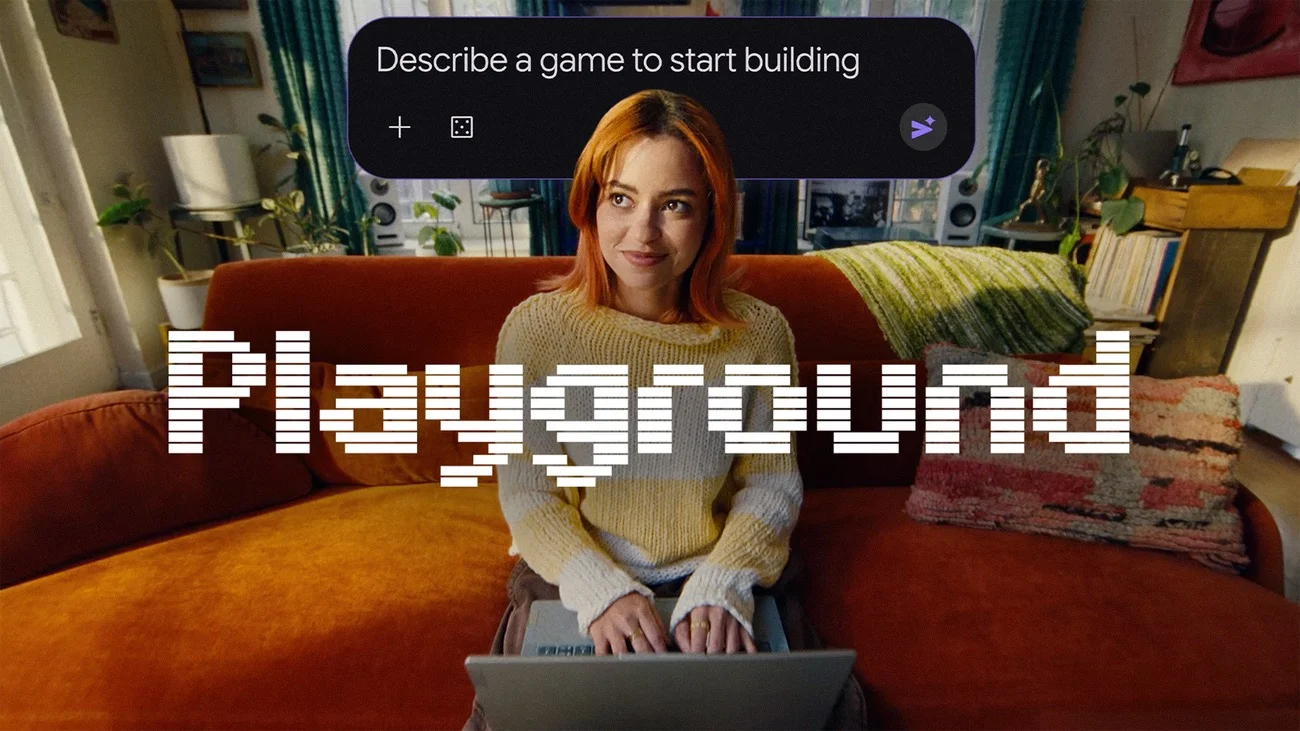
Image credit: Google, promotional artwork from the Playground announcement.
What can you make and share?
Start with your own idea, a starter prompt or guided help. You can then ask for changes to the rules, characters, physics or setting and test the result. Finished games can stay private, go to friends through a link or appear in the Explore gallery. They run on phones and laptops, with leaderboards and multiplayer in selected genres.
Google says published games go through safety screening, and players can report content.
Where does Unity Spark fit?
Unity’s announcement describes Spark as an upcoming creation experience that combines Google’s AI with Unity’s engine. The planned tools add more advanced game mechanics, high-fidelity 3D and Unity’s runtime. Unity says Spark is planned for later this year; Google says it is in testing, with a closed beta coming soon. Those features are a future step beyond today’s Playground release.
For a first experiment, try one small mechanic: a character that jumps between platforms, for example. Test whether the jump feels right before adding enemies or a scoring system. Start small so you can tell whether each change makes the game better. A playable first draft still needs your judgment about what makes it fun.
Sources: Google’s October 7 launch announcement and Unity’s October 7 press release, linked above.
Image credit: Google, promotional artwork from the Playground announcement.



No comments yet