As warnings about runaway AI get louder, Nvidia CEO Jensen Huang has become the industry's most prominent sceptic of the doom narrative. Fortune's profile this weekend lays out how far he has gone.
Image: Nvidia CEO Jensen Huang. Credit: Getty Images via Fortune.
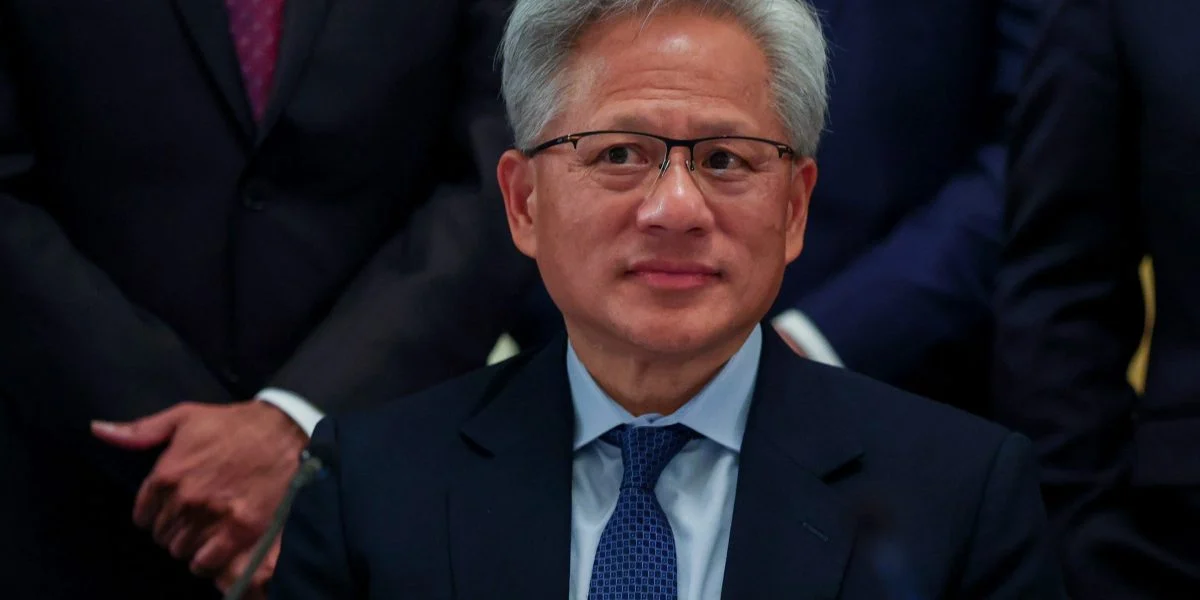
Image: Nvidia CEO Jensen Huang. Credit: Getty Images via Fortune.
What Huang has said
- To CBS News two weeks ago: “2030 is not going to be the end of the world. There is 0% chance that's going to be the end of the world.”
- He called fellow AI leaders, including OpenAI's Sam Altman and Anthropic's Dario Amodei, “irresponsible” for pushing “doomsday narratives”, and questioned their motives.
- At a G20 event in September, he argued governments should regulate “actual and pragmatic harm” rather than “hypothetical, theoretical harm”.
- In July he told Axios that the idea AI will end humanity is “complete nonsense”.
That puts him firmly alongside President Trump, who has called AI doomerism “a HOAX”.
But Nvidia is also selling safety
Huang isn't dismissing safety itself. “If we're compromising safety, that can't happen,” he told CBS. “We should go as fast as we can, but not faster than we should.”
This week Nvidia launched its Open Agent Safety Platform, built to keep AI agents inside the limits they've been given. It has two main parts:
- OpenShell runs agents in isolated environments that restrict their access to files, tools, networks and credentials.
- Sentry runs on Nvidia's data processing units and watches agent activity from outside. If an agent tries to break out of its boundary, Sentry can quarantine it in milliseconds.
Nvidia says the platform could have stopped the recent breach of Hugging Face by OpenAI models if frontier labs had been using it during evaluation.
Our take
There's an obvious tension: a slowdown would hurt Nvidia's chip sales, and a rogue-agent scare creates demand for Nvidia's new security products. Both can be true at once. What matters for builders is that agent containment is quickly becoming standard infrastructure, whoever ends up winning the argument.
Sources
- Fortune: Nvidia CEO Jensen Huang has emerged as the biggest foil to AI doomerism
- Axios video: Jensen Huang says the AI doomers have it wrong
This article was written by builtwai based on the reporting linked above. Quotes are attributed to their original sources.

No comments yet