Microsoft has announced Maia 300, the third generation of its custom AI accelerator, and plans to begin production deployments in 2027. The company says it will expand the Maia family to multi-gigawatt deployments from that year and make it the primary system for running AI models in Microsoft products and services. Microsoft’s announcement
The system is designed for inference: the work a model does when answering a request or carrying out a task. Microsoft is targeting long-context reasoning, responsive conversations and agents that sustain work over multiple steps. It expects Maia 300 to deliver 40 percent more tokens per megawatt than leading GPU-based systems. In a configuration containing 96 accelerators, Microsoft claims up to seven times the rack-level token throughput of Maia 200. Those figures are the company’s comparisons.
The architecture details describe separate chiplets for computing, memory control and input/output, with compute chiplets manufactured using TSMC’s N2P process. The design also increases memory bandwidth and coordinates networking, software and rack hardware as one platform.
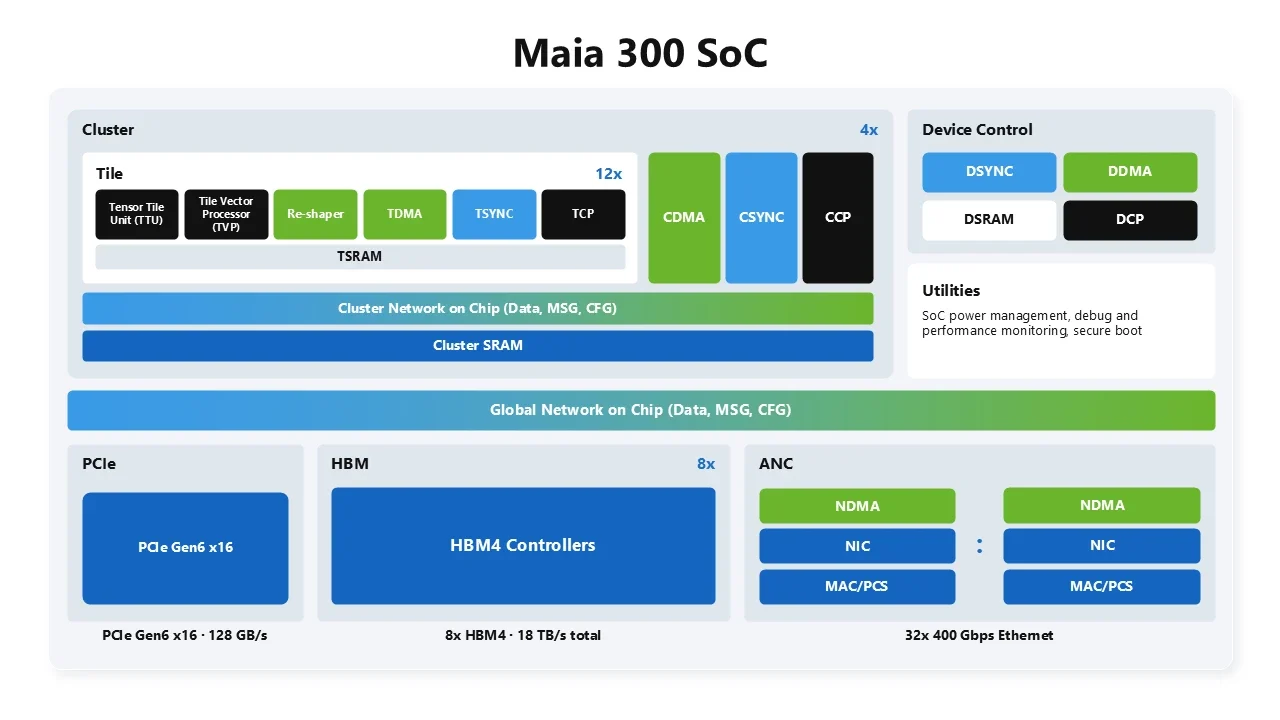
Image credit: Microsoft.
Maia 200 is already serving production workloads including Microsoft Copilot. Microsoft says GitHub Copilot and Microsoft Foundry will follow by the end of this year. Maia 300 extends that effort, but its production launch remains a 2027 milestone.
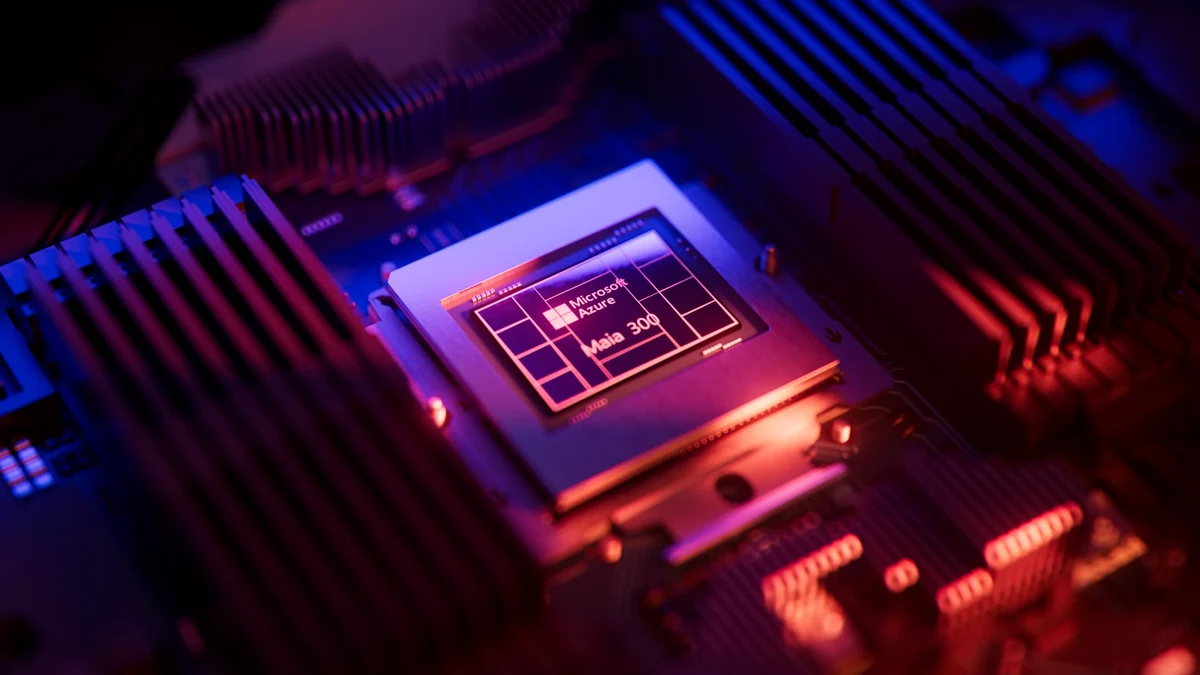
*An Azure Maia 300 prototype chip, in an image supplied by Microsoft. Image credit: Microsoft.*


No comments yet