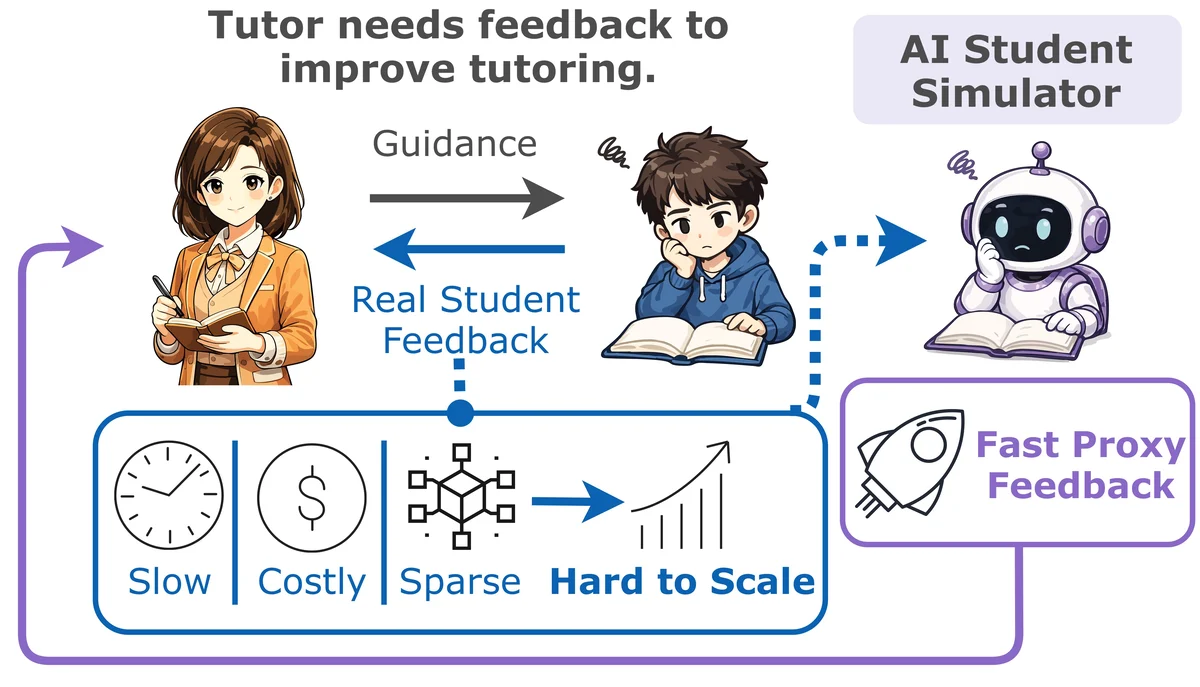
Microsoft Research described StudentSim on October 12, a research framework that gives AI tutors simulated learners to practice with. The underlying paper was first submitted on September 1; today’s update explains the system and its results.
An AI tutor can produce a correct explanation without knowing whether a particular student understood it. Testing every change with real learners takes time. A simulator offers an earlier feedback signal, but it needs to preserve the learner’s actual mistakes and skill level. Simply asking a capable language model to act like a struggling student can make the tutor look more effective than it is.
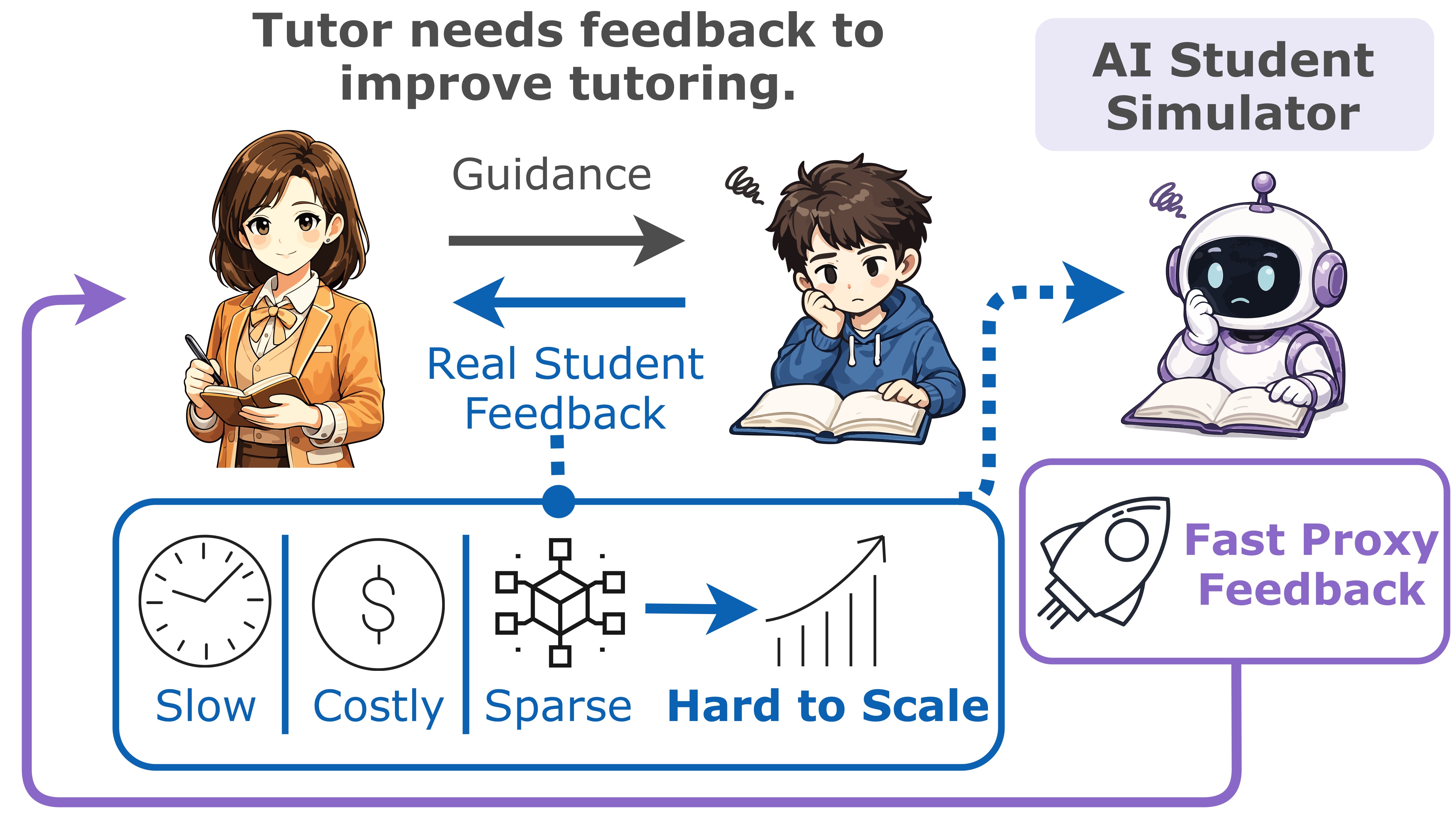
Image credit: Microsoft Research and the StudentSim authors.
How the simulated learner works
StudentSim uses public, de-identified learning records. Its training code first pools records within a subject to learn common response patterns, then adapts the model to each student. The result is an individual simulator that can answer a new question and revise its answer after guidance.
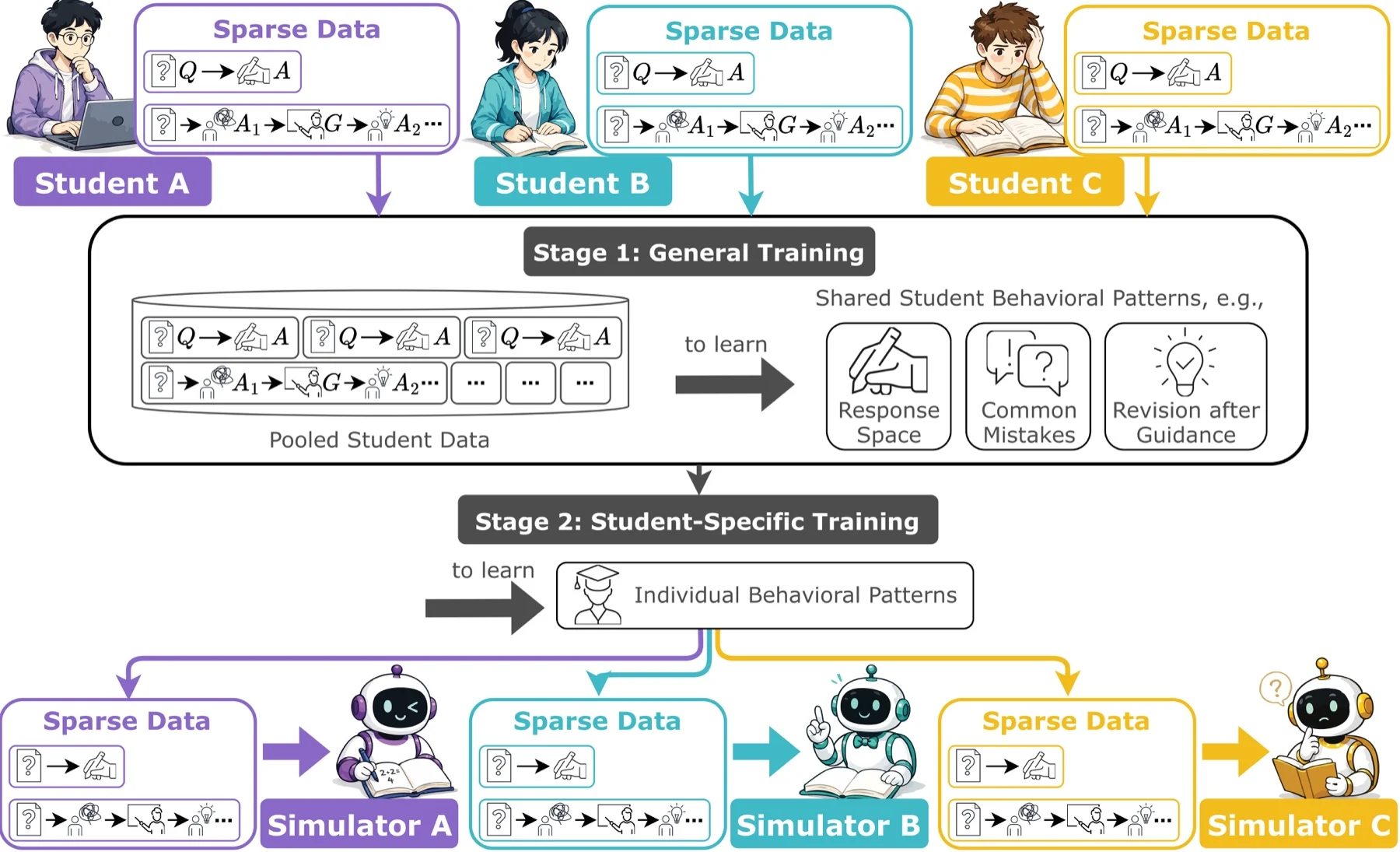
Image credit: Microsoft Research and the StudentSim authors.
What the researchers measured
The researchers’ StudentSimEval protocol covers 60 learners across chess, mathematics and second-language English writing. It measures two things: whether a simulator answers like the recorded learner, and whether it responds appropriately to tutoring. The paper reports stronger results than prompted GPT-5.4 across all three domains on those measures.
In a chess experiment, the team also used simulated responses to train an AI tutor. Stockfish scored how much a revised move improved after coaching. Microsoft reports that the resulting tutor reached 90.5% accuracy in the evaluation, compared with 75.7% for a tutor without reinforcement learning.
Those results concern a research setup, not improved outcomes in a classroom. Microsoft says real learner studies remain essential. StudentSim’s immediate use is to help researchers compare tutoring strategies before conducting those studies. The paper and code are public, and the repository is released under the MIT license.



No comments yet