PHP has released fixes for two critical vulnerabilities collectively called PHP2Shell. Tracked as CVE-2026-109618 and CVE-2026-109619, the flaws can allow an attacker to execute code on a vulnerable server without signing in.
The October 21 releases are available now. Separately, Cloudflare says it has observed attack traffic and has deployed WAF protections for customers on free and paid plans. Its announcement still urges customers to patch.
Patched PHP releases
PHP’s security notice lists these patched releases:
- PHP 8.5: 8.5.12
- PHP 8.4: 8.4.27
- PHP 8.3: 8.3.36
- PHP 8.2: 8.2.35
The project says all installations serving web requests should be treated as at risk, including PHP-FPM, Apache with mod_php, php-cgi, FrankenPHP and LiteSpeed. It considers mod_php the highest risk because a demonstrated attack can run before application code starts.
Why this reaches beyond a website’s code
These bugs are in PHP itself. The first advisory describes an out-of-memory interruption that can leave partially initialized request data for cleanup code to process incorrectly.
The second advisory concerns stale internal state. Memory belonging to one request can be released while a worker retains a reference; another request handled by that worker may then use it. The precise reachable paths depend on the server, application and extensions.
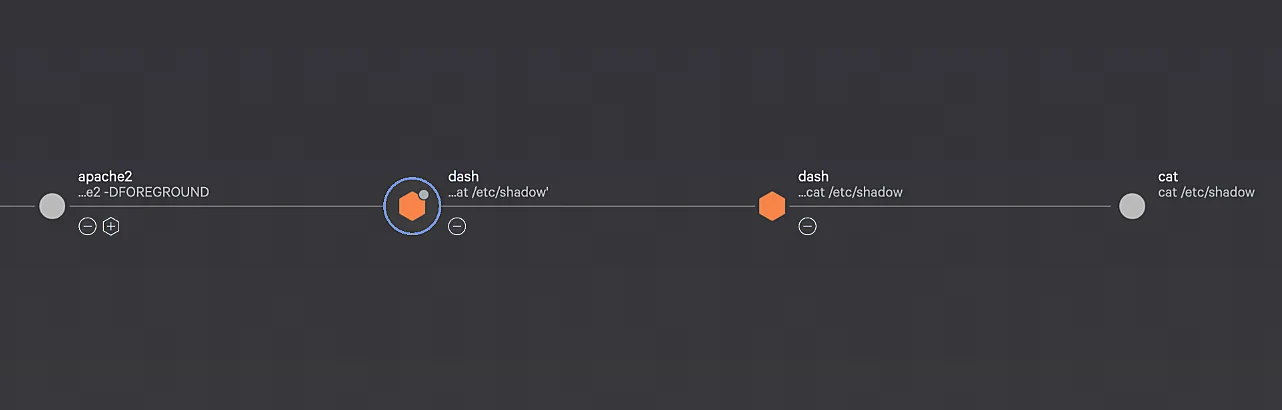
PHP’s first advisory confirms code execution as the web worker’s account. That does not automatically mean root access, but it can still expose the application’s files, data and credentials accessible to that account.
Cloudflare protection helps, but the server still needs updating
Cloudflare says its default protections were active from 03:02 UTC on October 21 for customers using its free or paid WAF. The company reports observing attackers vary their requests in attempts to evade the rules.
Its response uses a new capability called full transaction detection, combining request signals with the origin server’s response. A matching response can be blocked before reaching the requester. Cloudflare says this is useful when the incoming request alone is insufficient to identify an exploit.
That is an additional defense. It does not install patched PHP on the origin server, and Cloudflare explicitly recommends updating even when the WAF rules are active. Observed attack requests also should not be confused with proof that every targeted site was compromised.
What site owners should check
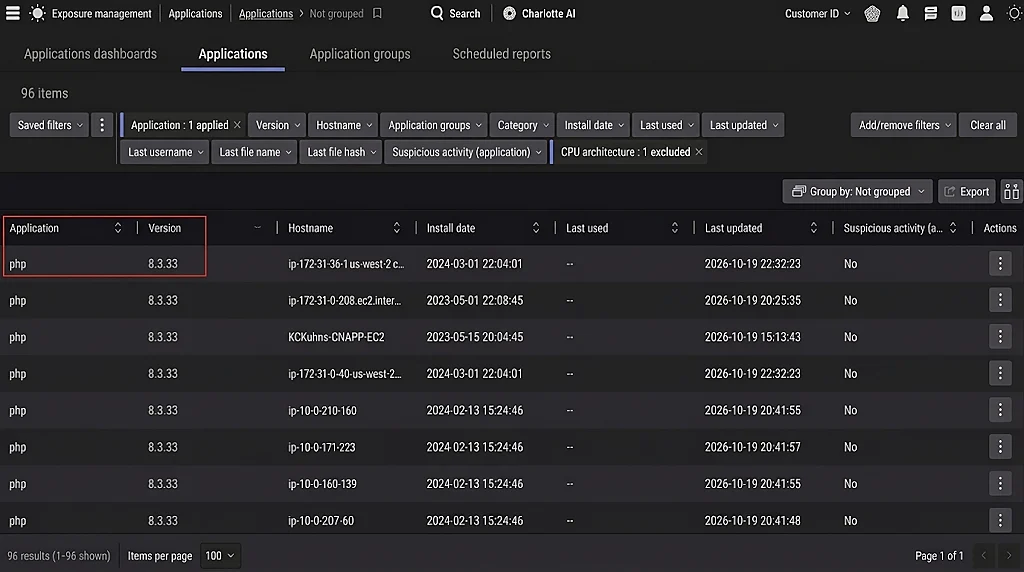
The Dutch NCSC’s operational guidance recommends identifying PHP applications and runtimes, prioritizing internet-facing systems, and checking bundled products separately. PHP can also sit inside appliances and management interfaces where the product vendor must provide the fix.
Updating a CMS theme or plugin is therefore not enough to establish that its underlying runtime is patched. Ask the hosting provider or system administrator which fixed PHP package is actually deployed, including any vendor backport. Containers and third-party images need their own checks.
PHP 8.1 and older are unsupported upstream. Some distributions and LTS vendors provide backported fixes; the PHP team has also published minimal source backports for 7.4, 8.0 and 8.1. Owners need the relevant vendor’s confirmation or a move to a supported branch.
Temporary mitigations have limits
PHP says configuration changes can reduce particular attack paths, but only an update provides a complete solution. Its guidance includes disabling upload-progress handling and restarting workers for certain paths. The advisories explain why that does not cover every variant.
Temporary configuration should follow the official instructions for the deployed environment. Avoid treating one changed setting, a quiet log or a WAF block count as proof that the server is fixed.
This article reflects the advisories available on October 21, 2026. The linked PHP, Cloudflare and NCSC pages are the places to check as vendor packages and operational guidance change.



No comments yet